561-581-0118
561-581-0118

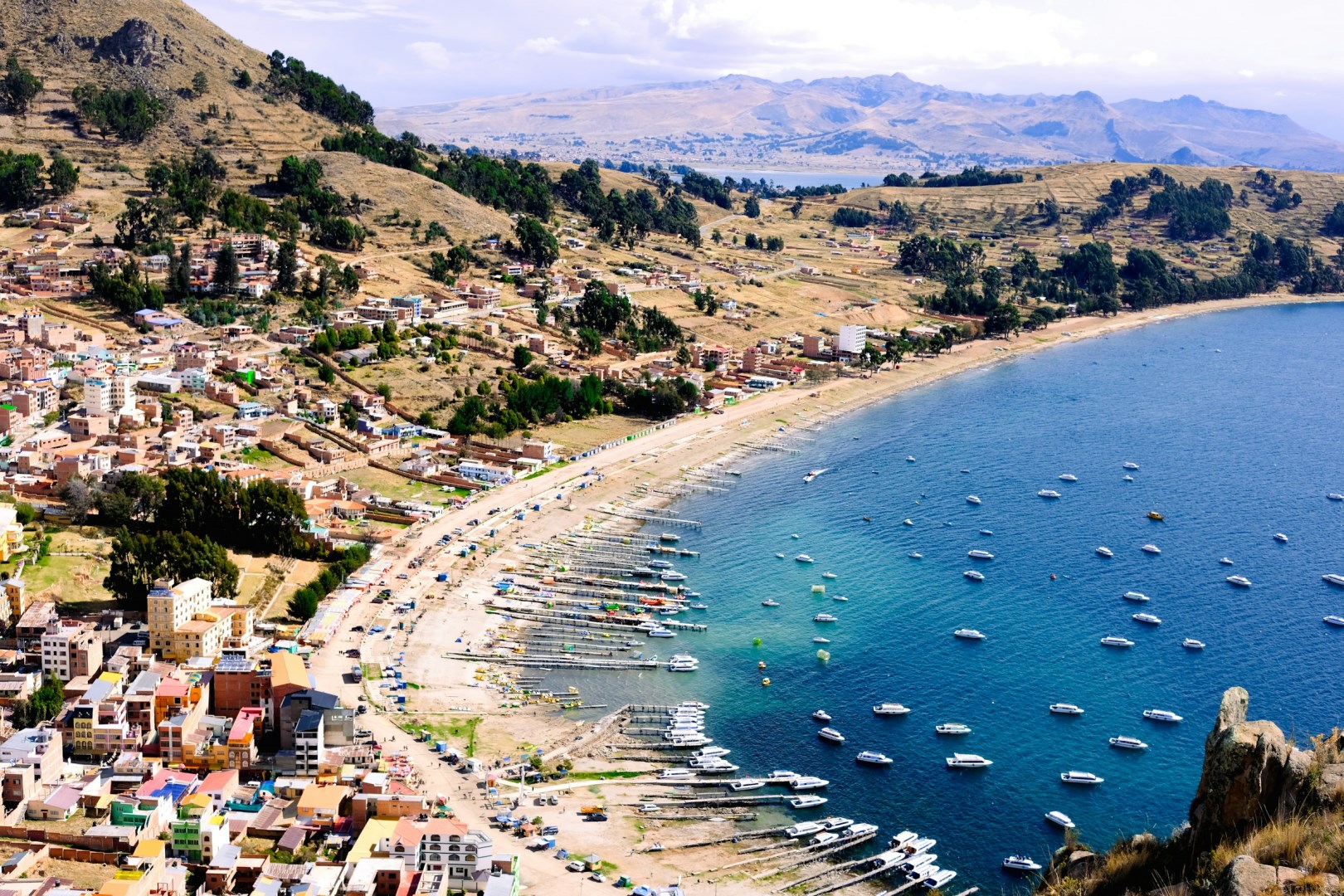
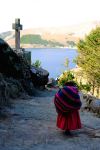
Copacabana is a lakeside town in western Bolivia, situated on the shores of Lake Titicaca near the Peruvian border. Its setting between the lake and the surrounding hills gives it a distinctive highland landscape, with views extending across the deep blue waters toward the distant mountains. Copacabana is one of Bolivia’s main gateways to Lake Titicaca and serves as a starting point for boat trips to Isla del Sol and nearby islands. The town also has a long-standing role as a religious center, drawing pilgrims and visitors to its important sanctuary.
Copacabana’s cultural identity is closely tied to both Indigenous Andean traditions and Catholic practices. The Basilica of Our Lady of Copacabana is the town’s principal religious landmark and houses the revered image of the Virgin of Copacabana. Pilgrimages and religious celebrations remain important parts of local life, often incorporating music, dance, traditional clothing, and Indigenous customs. Another distinctive local tradition is the blessing of vehicles, during which decorated cars and trucks are brought to the basilica to receive a priest’s blessing, combining Catholic devotion with regional beliefs and practices.
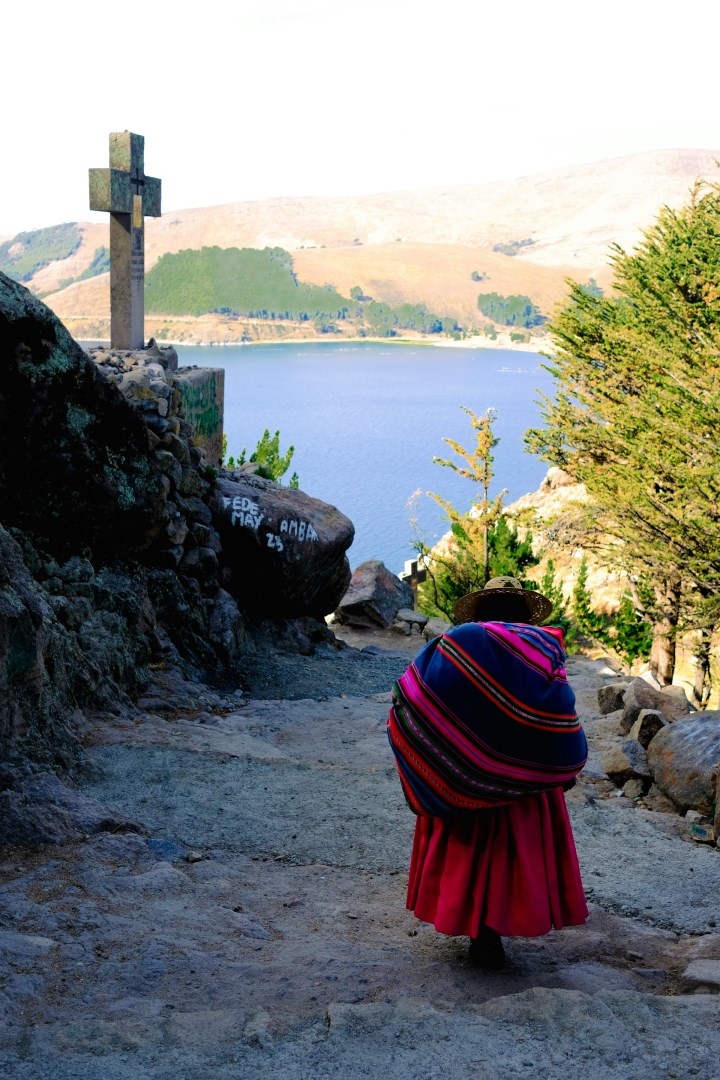
The hills around Copacabana provide viewpoints over Lake Titicaca and the surrounding Altiplano. Cerro Calvario rises above the town and is reached by a path marked with crosses, leading to panoramic views of the lake and shoreline. The nearby Isla del Sol is one of the region’s principal attractions and contains archaeological sites, traditional villages, agricultural terraces, and walking routes along the island’s hills. Lake Titicaca itself is the highest navigable lake in the world by commonly used definitions and supports distinctive high-altitude ecosystems and communities.
Local cuisine in Copacabana reflects the ingredients and cooking traditions of the Bolivian highlands. Trout from Lake Titicaca is widely served in local restaurants, often grilled or prepared with simple accompaniments. Soups, potatoes, quinoa, and other Andean staples are also common, while markets offer fresh produce and regional snacks. The town’s waterfront, hillside streets, craft stalls, and religious landmarks create a compact setting where everyday life is closely connected to the lake. Its combination of pilgrimage traditions, Andean culture, and access to Lake Titicaca makes Copacabana an important destination in western Bolivia.